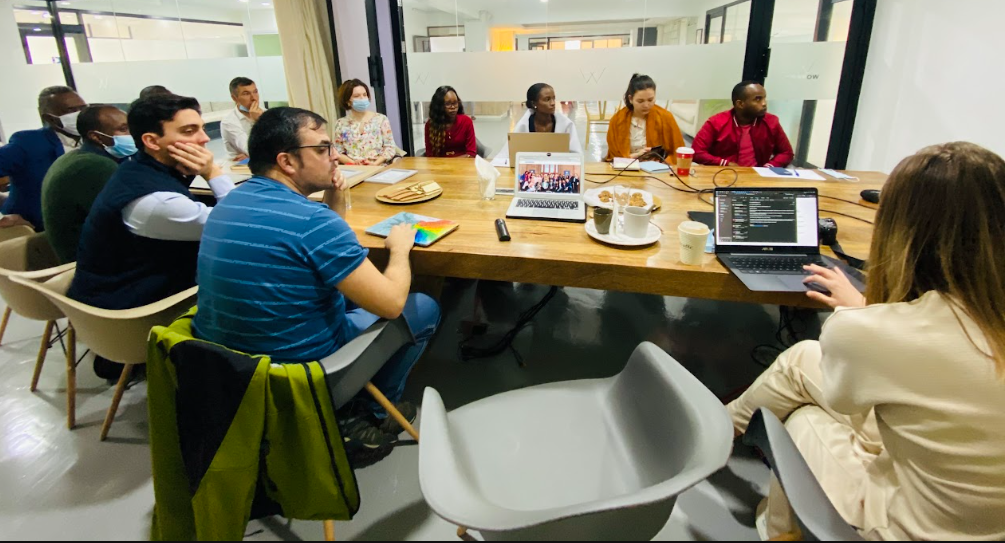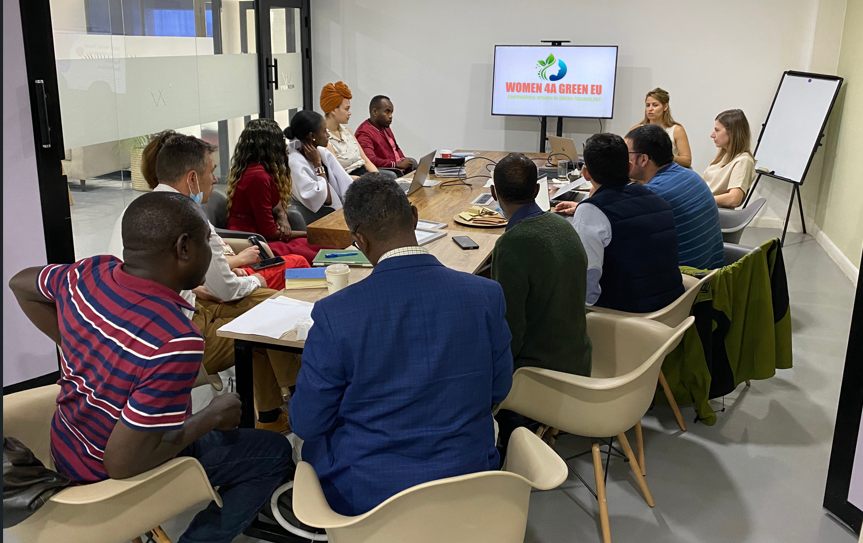


On 30 March 2026, the Nordic Diaspora Forum (NDF) organised the Swedish National Stakeholder Workshop in Stockholm, bringing together 25 participants from public institutions, vocational education and training (VET) providers, universities, private sector companies, civil society organisations and migrant-led NGOs. The diverse representation ensured that discussions reflected both policy perspectives and lived experiences in advancing women’s participation in the green technology sector.
The workshop combined interactive discussions with collaborative problem-solving. Following an introduction to the objectives of the Women4AGreenEU project, participants took part in two breakout sessions. The first focused on identifying the structural, educational, cultural and workplace barriers preventing women from entering and progressing in green technology, while the second explored practical solutions, existing good practices and opportunities for stronger partnerships, particularly to support migrant women and other underrepresented groups.
Although Sweden is recognised for its strong commitment to gender equality and sustainability, participants agreed that important challenges remain. Key barriers included limited access to professional networks, persistent gender imbalance in technical and engineering fields, a lack of female role models, and language and integration challenges faced by migrant women. Participants also highlighted difficulties in recognising foreign qualifications, insufficient access to technical Swedish language training, and limited flexibility in education and training pathways for women balancing family responsibilities or living outside major urban centres.
Stakeholders proposed a range of practical solutions to strengthen women’s participation in Sweden’s green economy. These included developing integrated programmes combining language learning, green technical skills and direct employment pathways; expanding flexible VET programmes tailored to green sectors; increasing mentorship opportunities and the visibility of female role models; improving coordination between employment, education and integration services; promoting more inclusive recruitment practices; and strengthening outreach activities within migrant communities. Priority recommendations also called for greater incentives for employers to recruit and promote women in green technology careers.
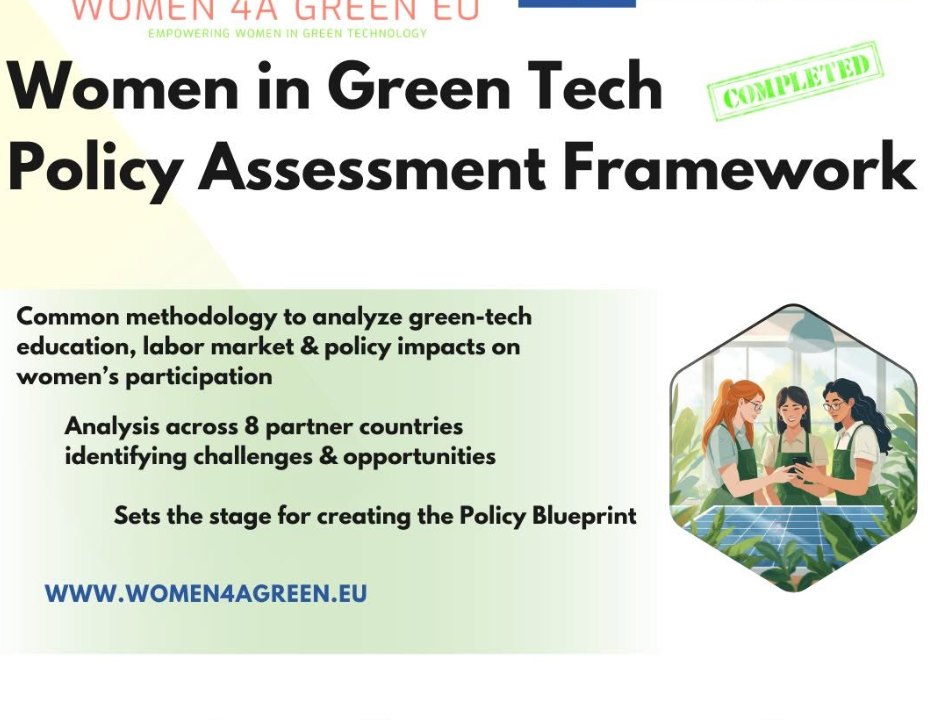
The workshop also generated important contributions to the Women4AGreenEU EU Policy Blueprint. Participants observed that while Sweden has advanced policies on gender equality and climate action, these policy areas are not yet sufficiently connected. They recommended introducing targeted programmes that integrate skills development, labour market integration and green employment, improving the recognition of foreign qualifications, expanding accessible green VET programmes, strengthening collaboration between public institutions, industry and civil society, and ensuring that migrant women are explicitly included in green transition strategies at both national and European levels.
Participant feedback was highly positive, with attendees valuing the opportunity to exchange perspectives across sectors and recognising the workshop as an important step towards developing more inclusive policies. Many participants highlighted the increased understanding of the interconnected barriers faced by women—particularly migrant women—and expressed strong interest in continuing collaboration through future networking and follow-up activities.