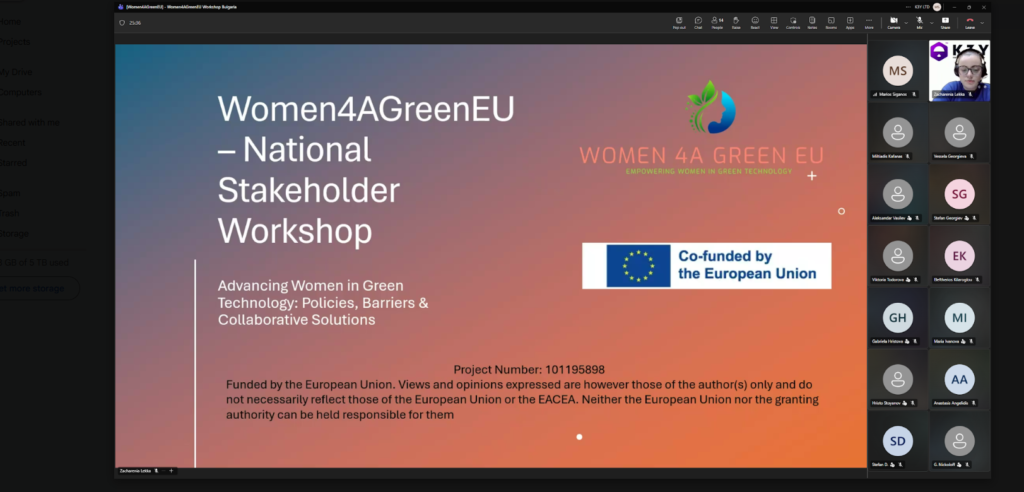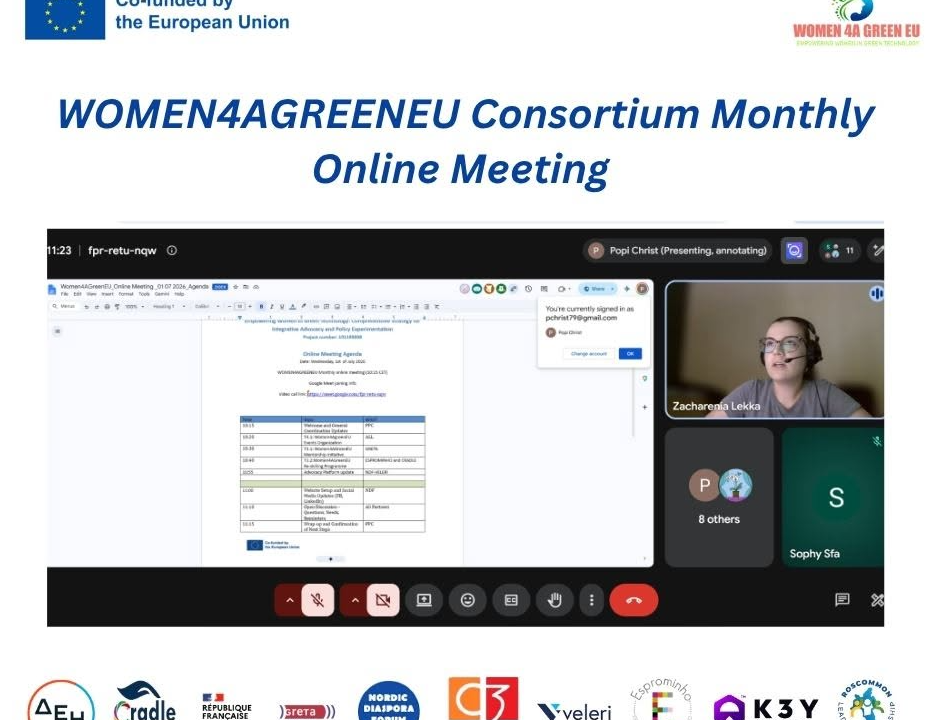


In April 2026, K3Y Ltd. organised two online National Stakeholder Workshops in Bulgaria as part of the Women4AGreenEU project. Held on 1 April and 30 April 2026, the workshops engaged 27 participants representing school educators, female entrepreneurs, green technology companies and students.
The workshops introduced participants to the objectives of Women4AGreenEU and the European policy framework on gender equality and the green transition before moving into interactive breakout discussions. Participants explored the barriers women face in STEM and green technology, identified existing good practices and opportunities, and developed practical policy recommendations to strengthen women’s participation in these sectors.
Stakeholders highlighted several key challenges affecting women in Bulgaria, including persistent gender stereotypes, the lack of effective legal protection and enforcement, discrimination during recruitment and promotion, limited mentoring opportunities, insufficient female role models, unequal family responsibilities and restricted access to specialised training and scholarships in STEM and green technologies. Participants also stressed that workplace culture and unconscious bias continue to discourage many women from entering or remaining in technical careers.
At the same time, participants identified promising opportunities to improve women’s participation in green technology. These included stronger use of European programmes such as Erasmus+ and Horizon Europe, national gender equality initiatives, the Bulgarian Centre for Women in Technology, the growing technology startup ecosystem in Sofia, and the expansion of renewable energy and sustainable agriculture sectors. Stakeholders proposed establishing national mentoring schemes, expanding green skills training, strengthening women’s entrepreneurship, building partnerships between industry and education, and creating clearer pathways into STEM careers.
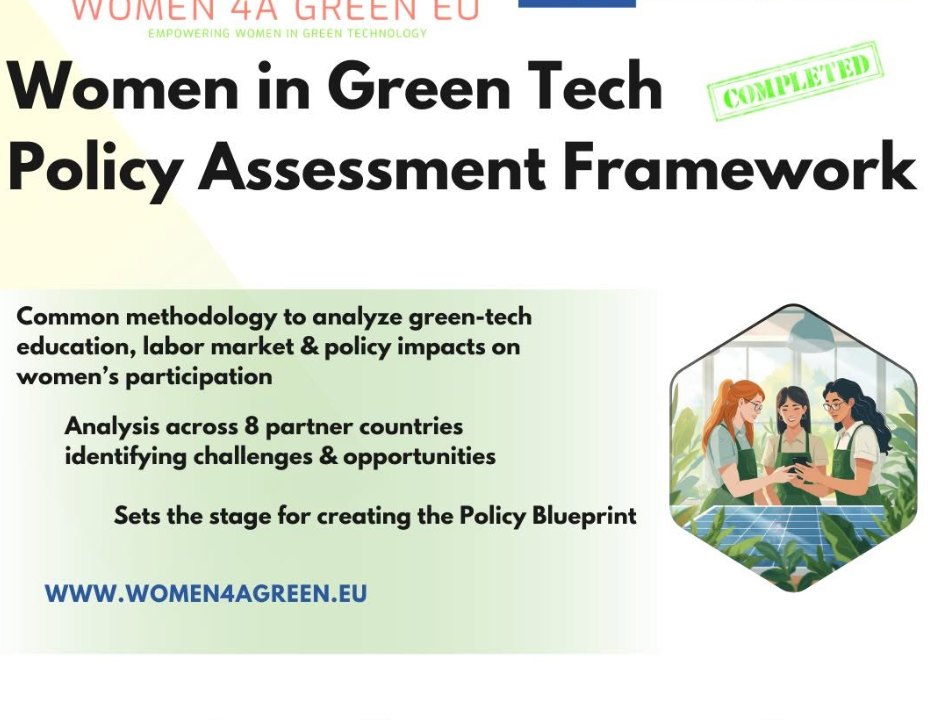
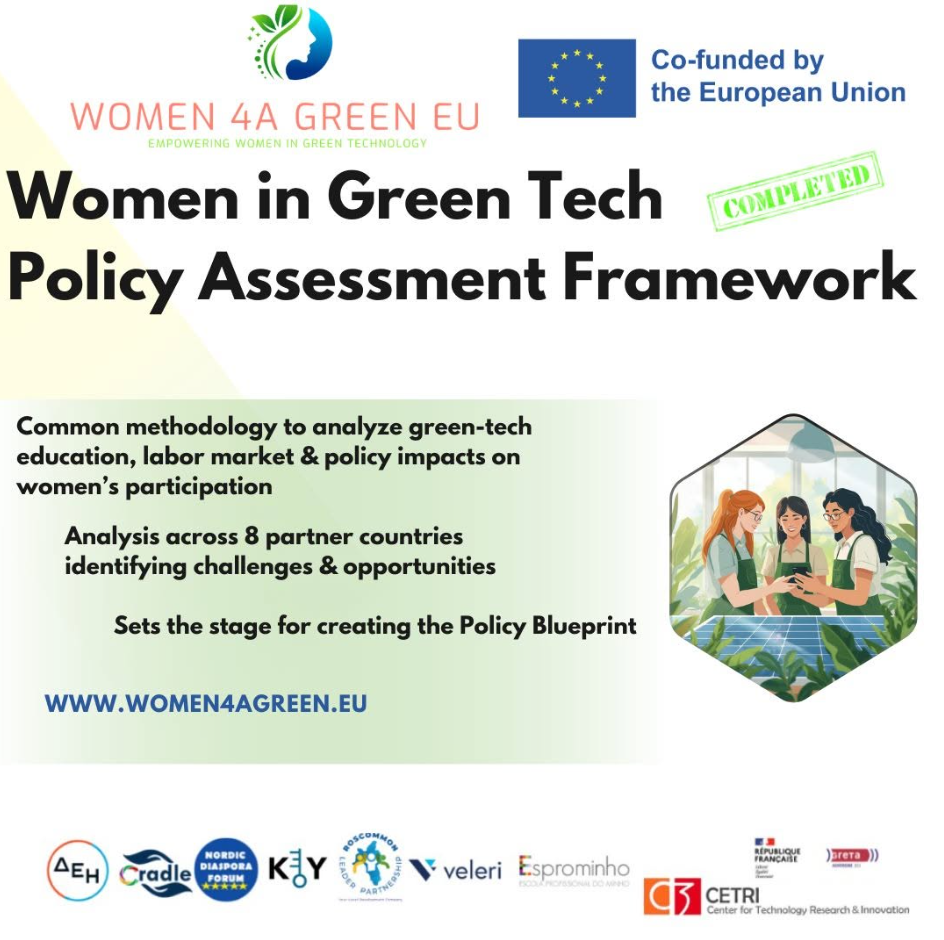
The workshops also generated valuable input for the Women4AGreenEU EU Policy Blueprint. Participants recommended promoting merit-based recruitment and equal pay, increasing scholarships for women, modernising educational programmes, supporting work-life balance through flexible working arrangements, raising the visibility of female role models, strengthening collaboration between universities and industry, and developing national awareness campaigns to challenge stereotypes. These recommendations closely align with EU priorities on gender equality, lifelong learning and the green transition.
Feedback from participants was overwhelmingly positive. Most attendees came from the education sector, and overall satisfaction exceeded 96%, with participants praising the relevance of the discussions, the quality of facilitation and the inclusive atmosphere. The workshops successfully created a collaborative platform for shaping national and European policy recommendations that support greater participation of women in Bulgaria’s green technology ecosystem.