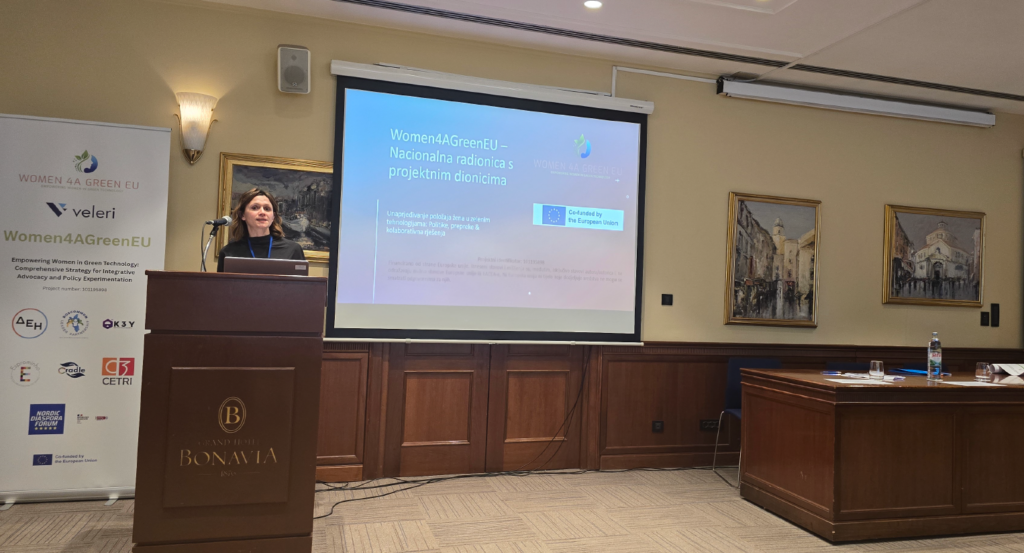


On 23 February 2026, the Women4AGreenEU project successfully held its Croatian National Stakeholder Workshop in Rijeka, bringing together 28 participants from vocational education, higher education, entrepreneurship, local authorities and civil society. Organised by the Polytechnic of Rijeka, the workshop created an inclusive space for dialogue on how to strengthen women’s participation in the green economy and STEM sectors.
Through interactive discussions and breakout sessions, participants identified key barriers that continue to limit women’s opportunities, including persistent gender stereotypes, the lack of visible female role models, insufficient career guidance for girls, and limited access to technology and training in rural areas. Stakeholders stressed that overcoming these challenges requires coordinated action from education providers, employers and policymakers.
The workshop also highlighted a range of practical solutions to promote gender equality in the green transition. Participants recommended expanding scholarships in STEM and green technologies, supporting women’s professional networks, encouraging male allyship, investing in educational initiatives from an early age, and strengthening monitoring of existing EU policies. They also emphasised the importance of increasing public awareness and ensuring that women entrepreneurs receive greater visibility and support.
Discussions generated valuable policy recommendations for the Women4AGreenEU EU Policy Blueprint, including curriculum reforms aligned with labour market needs, tax incentives for employers recruiting women in green sectors, wider public awareness campaigns, and dedicated start-up incubators for women entrepreneurs. Participants agreed that stronger implementation and monitoring of gender equality measures across Member States is essential to achieving lasting change.
Feedback from participants was highly positive, with approximately 90% overall satisfaction. Stakeholders particularly valued the collaborative discussions, practical policy recommendations and the opportunity to contribute directly to shaping future European actions that will empower more women to lead the green transition.